Showing posts with label CSA. Show all posts

Saturday, September 7, 2013

Preserving the Harvest - Conveniently - Peppers


People are starting to return to the idea of  putting up their own produce. People are canning, again - even here in Manhattan, high end cookware stores carry canning kettles and jars. In their desire for local food, people are buying produce and canning it, or making jams and pickles.

Yeah - I'm not going there...

OK, understand - if you enjoy it, it can be a cool thing to do. If you have your own garden, and the time and energy, it's wonderful.  If you have a good source of produce, and like to cook, it's a great and productive hobby. I have, in my day, made small batches of pickles and chutneys. I thought it was fun, and I enjoyed having them in winter. That's not what this blog is about, though...


I've discussed my take on Convenient Foods.  This is an elaboration of that, with the seasonal nature of produce added. For example - in August and September in the Northeast, we get lots and lots (and lots...) of hot peppers. I can't use them all at once... In fact, cooking for two, I don't always want even one whole pepper (depending on the dish and the type of pepper.)  But I can chop them, put them in a freezer bag, and then sprinkle a little out at a time, and add a bit of zip to our meals for months. I've never found I needed to cook them first - they cook rapidly, and I haven't had them deteriorate in the few months I store them.  (Most vegetables do need to be blanched or sauteed to kill enzymes.)

We interrupt this blog to give the Pepper Warning.

Hot peppers are - HOT. When cut, they exude capsaicin, which sticks to your fingers. It burns. This is easily avoided... so avoid it.  Wear gloves, do small amounts at one time. Most of this won't bother most people *too* much chopping one pepper at a time. But sensitivities vary, and it will still cause a great deal of discomfort, and doing it all in advance means you never have to worry about it again...

Wear gloves. These can be rubber dishwashing gloves, or latex (or other) food handlers' gloves. Even with the gloves, be aware that you have transferred oil to anything you touched - including the hand that took the glove off... and to any objects you are now picking up.

Wearing the gloves, you still need to be very careful about not touching your face. We tend to do that without thinking - brush a hair away, push up glasses, scratch a nose... heaven forfend, rub an eye... Don't! The skin on your face is more reactive than most other skin. Do Not Touch your Eye. I was planning this post a few weeks ago, though didn't have a chance to shoot pictures and write it up then. I was thinking about this, while chopping peppers - and five minutes later cleverly rubbed my eye (I had hay fever) and felt pretty foolish... Remove contacts *before* handling peppers, unless you can be certain there will be *many* hours before you need to. (A friend told me that...) When you are done, wash your hands thoroughly with soap - and *still* be careful for a couple of hours.

Do not (how to put this delicately...) touch mucous membranes - your own or anyone else's. (You don't want to know...) That includes mouth and lips, by the way...  don't pick up a piece of cheese and pop it into your mouth - or your child's. (Children are more sensitive than adults.) Don't lick your fingers 10 minutes later.

Now that I've scared you all... I usually actually don't bother with gloves. I have small hands, and have trouble getting them to fit, and feel more control without them - so I try to be careful and, unfortunately, accept a certain amount of a burning sensation. As I said, though, different people react with greater or lesser severity - start by being cautious. Still, none of this (usually) does any actual damage - you just really don't want to hurt if you don't have to.

The easiest way to do it - the way I do so much of this - is to just chop a few at a time. Get 5-6 peppers from the market or CSA? Chop 3 this evening, toss a bit into tonight's dinner and the rest into a freezer bag, do the same in another couple of days...  takes maybe five minutes (if that) more than you would have spent on tonight's dinner anyway... This time, I had a lot, so I did about a dozen - but you don't have to.

You often hear that the hottest part of the pepper is the seeds. That's not exactly true - the hottest part is the whitish pith that surrounds the seeds. Removing the seeds *and* much of the pith is generally a good idea... I cut the pepper lengthwise, and then use the tip of the knife to sort of scrape out the seeds and pith (the knife helps me avoid touching it, as well as cutting any thick parts.)

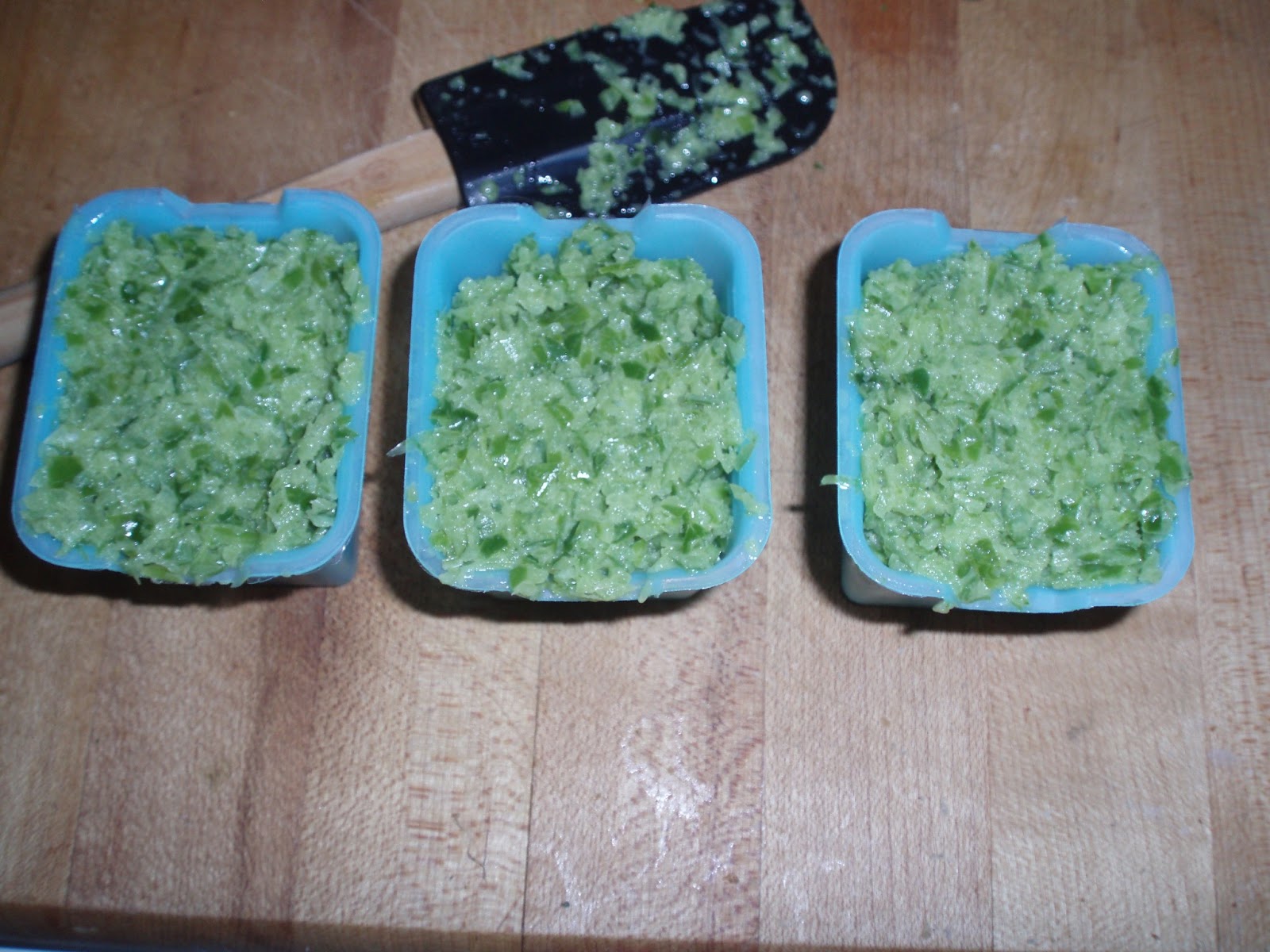
Then I chop the peppers into pretty small pieces - you don't want to suddenly bite down on a big hunk o'pepper in your sauce - and scoop them with a knife or a spatula into the bag. One handy thing is that I find I can just keep adding, and replenishing - you can see this bag has been used a lot. I do periodically empty and wash it. And I do use up all the peppers at some sad point in midwinter...

I flatten the bag, and lay it flat in the freezer. The bits don't stick together - after they freeze, I can put the bag, with all the peppers in the bottom, on the freezer door. That is where I keep all my assorted flavor boosts. They're easy to find, and don't get in the way of, or get confused with, the other food. I don't want to have to push through frozen peppers and leeks and celery and parsley to find the cooked kale for tonight's dinner!

I like being able to add a bit of heat without it being any big deal at all - I just drop a  little in with my onion and/or other aromatics. I like having that summer taste in December. I like that mixing the different kinds evens out the heat a little - we get a wide variety, as you see, and some are much hotter than others. If I have them mixed, I don't accidentally get a fiery dish from using the same amount as I did of another kind last week... And, really, I like the attractive variety of colors. Don't they look festive?

Tuesday, September 3, 2013

Grilled Summer Vegetables - Pretty Little Eggplant...


We got the cutest little eggplants from the CSA... 


I don't normally go all ecstatic over Cute - but really, aren't these adorable? Delicate, tiny little things, streaked with lavender, almost too pretty to eat.

I couldn't see just simmering them into a sauce, or mushing them up into baba ganoush or some other spread. They had to stay intact. So I decided to grill them.

I also had a patty pan squash. The other day, I wrote that I haven't really found an attractive way to cut them - but then I'd thought of slicing them to preserve the flower shape, and grilling the slices. Put the ideas together - and I had this leek I'd already trimmed (so it would fit in the vegetable keeper...) and I had a dinner concept.

I washed the eggplants, and cut them lengthwise, to preserve the shape. Then I sliced the squash horizontally, so I had flower shaped discs. I could, of course, use the same treatment on any slices of eggplant or summer squash - I have, in the past. It's particularly good, though, for preserving the appearance of an attractive vegetable.

I sliced the leek lengthwise, too. I'll go into this in more detail another time - but leeks should always be slit up the middle. The way the farmer gets the nice long white part is to hill sand up around the growing plant (a process called blanching.) Since they are grown buried in sand, they get sand inside the plant, and it is almost impossible to wash all the grit out leaving the layers intact. Usually, I slit them up the middle and then slice them, but you can also, as I did here, slit them while leaving the root end intact, and then wash thoroughly under running water, to get all the grit out from inside the leek. (You can see the sand and grit in this picture... that is normal,  but it did all wash out.)


I find that grilled vegetables, even on a grill pan (rather than an outside grill, which I do not have) cook better with just a little oil brushed over them. In this case, I put a splash of olive oil in a bowl, and then added just a drizzle of sesame oil for flavor.

I used an open pan - this could also be done with one of the closed grill pans - George Foreman is well known, but Cuisinart has one, also, and there are others. The vegetables will cook more quickly in one of them, partly because heat is being applied to both sides, and partly because the natural steam is being held in to some degree - an advantage with the vegetables. The disadvantage to them, though, is that bigger pieces hold the top up, so it doesn't touch the thinner or smaller pieces. They work best when all slices of food are the same thickness, which was not the case here. (If you don't have a grill of any kind, you can do this in any good skillet - the whole side will brown nicely, instead of giving you pretty grill marks, but that doesn't make a serious difference.)

Anyhow, I used a pastry brush, and lightly  brushed one side of the vegetables with the oil mix, then put them oiled side down, on a preheated pan. I wanted the pan to be hot when the veg first hit it - that's what gives you the nice browning effect. Then I brushed the side facing up with oil, so it would be ready when I flipped it over.

Unfortunately, as they cooked, the eggplants did lose the pretty lavender color... oh, well. They made up for that by attaining the pretty brown grill marks...  I watched them, and, as the individual vegetables showed signs of softening (and changing color) I turned them over with tongs.


I had more than fit on the pan, so, as they then cooked, I removed them to a platter, which I covered to keep them warm. I was cooking potatoes and leftover ham for the rest of the meal, so I microwaved the potatoes until mostly but not completely cooked, then sliced them and added them to the grill pan for browning. (In my microwave, that was 2 minutes for four small/medium potatoes, then turn them over and give them another 2 minutes. I find that timing varies considerable by oven, though - that would have taken a minute or two longer in my previous one.) Meanwhile, I heated the ham in a fry pan, until it, too, browned.


Notes for future - the leek was basically cooked, but a little bit chewy, still. Another time, I might start it well before the more tender vegetables, or parboil it, or (more simply) microwave it a minute or two, as I did the potatoes, to, essentially, parboil it.

Also, Rich said he felt the ratio of skin to meat on the eggplants was a little high. Well... He suggested peeling them, and I suggested that he was welcome to peel a dozen tiny ones if he really wanted to, though I wasn't sure how much eggplant that would leave, and... The real issue was that, while the meat was tender, the peel was just slightly tougher - so parboiling might be an option for them, also. (I didn't mind it. OTOH, in general, he likes eggplant better than I do, so keeping him really liking it is worth something.)  Of course, if I were just grilling slices of larger eggplant, which would be more common, none of that would be relevant. On the whole, we did like it, and felt it came out well, as an experiment.

The other thing we were experimenting with was taking pictures. I do want to improve them, and Rich is the photographer in the house. So he hauled out a tripod, so we could try available light, instead of flash... and you see the results. (Now we're working on another light source...)

Meanwhile, though - this is a *tiny* kitchen. The building was built in the late Forties, as part of the G.I. housing rush, at the height of the fascination with the inefficient Efficiency Kitchen. Two people cannot work together in this kitchen. (Two people can barely stand together in this kitchen!) So, there we were - him and me and the tripod, with not really enough room for any two of the above, when the Big Cat (all 20 pounds of him) decided to join us, and stretched out smack in the middle. So helpful... He's going to Inhabit that Kitchen, all right!


Grilled Summer Vegetables

Assorted vegetables - eggplant, summer squash, leeks, onions, potatoes, whatever is on hand, and suits your taste.
1 T olive oil
1/2 tsp sesame oil


Wash vegetables, and slice into appropriate shapes. If desired, microwave or parboil tougher vegetables, until barely cooked, so they cook in much the same time as the more tender ones.

Heat grill pan. Mix the oils in a bowl. Use a pastry or basting brush to brush the oil very lightly on one side of the vegetables. Place the vegetables on the hot pan, oiled side down. Brush the other side with oil.

As each piece cooks (determine by color and tenderness) turn it over. If you need more than one batch, removed cooked pieces to a platter, and cover lightly with a clean towel, to keep warm.

Saturday, August 31, 2013

Vegetables From Space!!!

Some vegetables just look so... Cool. Or do I mean weird? Kind of a great still life, but... does anyone really know how to cook them? Or even what they are?


And are we sure they're not some alien life form? All right - I'm going to date myself, here - child of the Sixties that I am, that picture looks to me as if those things landed from outer space to sit on my dish towel. (Though they're a bit more colorful than most pictures of UFOs I remember seeing... let alone real space capsules.)

The Flying Saucer - on the left - is a patty pan squash. It's a regular summer squash, just like zucchini, or crookneck. Just cut it up and cook it the same way. No, I do not have pictures of a suggested way to cut it - I've never found a way I was particularly pleased with - just hack it into chunks.

If you get some that are small enough, they can be cooked whole, and that's really attractive. I was even served them as an appetizer at a very nice wedding, once! Specialty stores do sometimes sell baby squash (at a premium, of course) for the purpose. I have not had luck with cooking a standard one whole - the outside seems to get soggy before the middle is done. One of these days, I'll experiment with stuffing one, as people stuff large zucchini, but I've never really stuffed vegetables much, so don't have anything yet. I can see it being a very nice presentation, though...

Sputnik, on the right (no, I don't actually remember Sputnik, but it was part of the general culture of my childhood) is a kohlrabi. Actually, the stems have been snapped off this one - the resemblance is much stronger when it still has stems sticking out at all angles! And they come in purple, too - one of the farmers here had piles of green and purple ones all winter.


(Ah - here's a purple Sputnik...)

Five years ago, I'd heard the word Kohlrabi, but could no more have told you how to cook it than, in fact, how to build Sputnik. I was walking past them at Greenmarket... and then I got some, at the CSA. Time to learn.

Well, I was missing out.

It's almost two different vegetables. Now, in Summer, the kohlrabi I'm getting are young and tender, crisp and juicy, and I cut them up raw for salads. They have a very slight bite - much less than a radish, but enough to be interesting, and they are very pleasantly crunchy. As the year goes on, though (and as we move out of salad season... see, it works...) they become harder and more fibrous, and need cooking. A light saute at first, and then, in winter, I simmer them as I would a carrot.

Even the young, tender ones need to be peeled, though. I'm normally all for scrubbing vegetables instead of peeling them, as so much of the nutrition lies in or just under the skin, but some peels are just inedible, and this is one.

I can't even use my swivel peeler for a paper thin paring... this peel is thick and tough and fibery, and if it gets into your dish, you find yourself spitting out stringy bits - very unpleasant. Luckily, once you cut it, the peel is quite visible - no guesswork needed. It is a darker color, and the tender center is very pale. (And the purple ones are only purple in the peel - the middle is very pale green.)


Once I peel them, I just cut them in cubes or rectangles - again, rather like carrot sticks. Right now, the texture is more like a very juicy radish, so I want them bite sized for my salads - not a thin slice, but enough to crunch. A half moon shape would be fun, too, if you have some small enough.


What vegetable have you seen at the market (or gotten at the CSA!) that intimidates you? Or that you just don't have a clue about... what is it, how do you cook it, will you even like it???

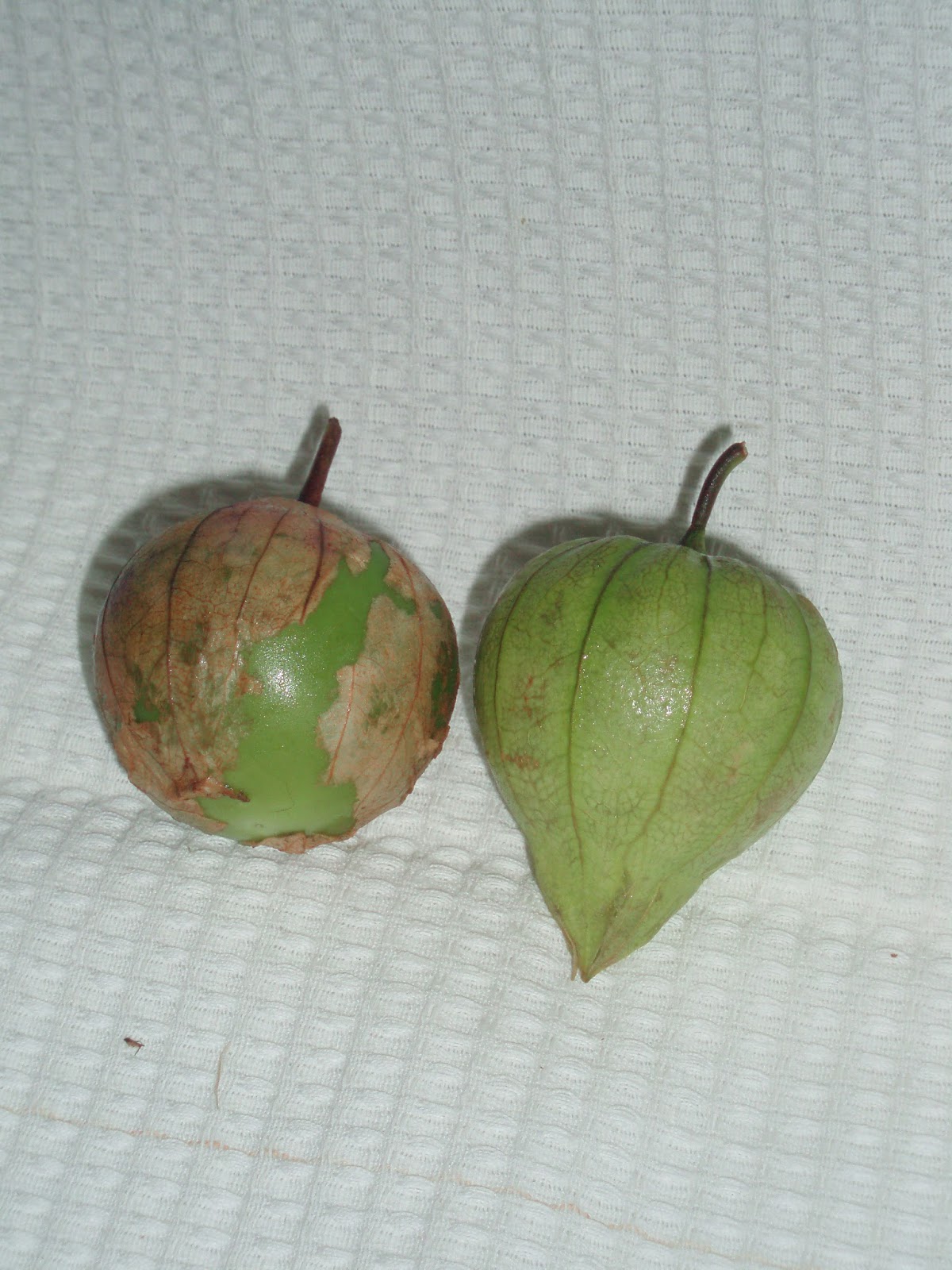
I now must go forth and venture where, well, where *I* have never gone before, though many fine cooks have... the tomatillo. I just saw an intriguing recipe on another blog - Not Eating Out in NY . It is, logically, perfectly seasonal here - but I'll probably tweak it... my CSA doesn't give me many beans.  (Eggplant, now... I wonder what it would be like with eggplant...) But, for the first time, I feel I can make something other than salsa verde.

Adventures in vegetables!

Wednesday, July 31, 2013

Theme: Basic greens

Just as I started getting this going - wouldn't you know, my computer died. And took two weeks worth of pictures with it... Oh, well, this was the stage to have that happen - and learn how to make sure it doesn't happen again!

I do now have some computer access again - and some new pictures. And here I start, yet again.

The CSA is well under way, and we've had many bunches of cooking greens. Chard, kale, broccoli rabe, beet greens, mustard greens, turnip greens, radish greens (Yes, you can eat them - I didn't know that myself, until recently!) and collards. This is my preferred basic cooking method for all but the toughest. I don't personally like mature collards cooked this way - but some do. (A friend just ate the first collards she ever liked, sauteing them with this method...) I'll write about them, later.

The washing method is key. I use this to wash lettuce and other salad greens, too. Vegetables from a CSA or farmer's market haven't usually made the detour supermarket vegetables may have made to a washing plant - where everything is made nice and clean, at the loss of another day or so of freshness, more handling, another layer of expense... I don't mind washing the sand from my own kale, but I need to be sure I actually do so.

Take a bunch of greens. I prefer to chop them before washing, though you can do it the other way around. Trim the ends and any tough parts of the stems.  I eat most of the stems of most vegetables, but I remove them if they are getting stringy. Chop the greens if desired.


Fill a sink or a large bowl with water. Place the greens in the water, swish them around, and lift them out. This does a much better job of leaving dirt and grit behind than rinsing them in a colander does. Then place the greens in a strainer or colander to drip dry. Chop them now, if you wish, and haven’t already.


Take a large saute pan or frying pan, and heat it. Add a little olive oil (about a teaspoon or less) to the pan, and let it heat slightly. Put the greens in the pan, with still just a little water clinging to the leaves, and toss them around in the oil. (A pair of cooking tongs is the easiest way to do this, but you can stir with a spatula or spoon, as well.) You want all of the greens to come into contact with the oil.


As they cook, you will see them start to become a darker green. When they are thoroughly tossed, let them continue to simmer over low heat, stirring occasionally, until they are cooked to your taste. (I prefer a dark but bright green, not yet olive colored. If you are not sure, cook less to begin with - you can always cook more later.) Note that the vegetables also cook down considerably - a large bunch usually gives us just two or three generous servings.


Variations of this are very easy. The simplest is to saute onion, garlic, or other aromatics in the oil before adding the greens - I almost always do this. Other, flavorful cooking fats, such as a single chopped slice of bacon, substituted for the olive oil,  add flavor. (Butter burns too easily - if you really want that taste, say, with a delicate green such as spinach, mix half olive oil and half butter.)  A splash of good vinegar or pepper sauce at the end is tasty.

And, of course, each different vegetable itself has a very different taste. Spinach, for example, is radically different than the equally tender but slightly bitter broccoli rabe - and they are both different from kale.  It can even be interesting to mix several kinds, such as assertive mustard greens with milder, sweeter chard. Even though we have some form of sauteed greens several times a week, it never feels repetitive - too much variation in taste.

Friday, June 28, 2013

Scape hummus

Scapes!


Garlic scapes are one of the best examples of something from nothing food - and very definitely something you'll find in a farmer's market, rather than the local chain grocery store. They are shoots that grow from hardneck garlic, and farmers cut them off, so the garlic heads will be plumper. They are often just thrown out, but for years farmers ate them themselves, and now have made a market for them. 

The Baroque curls of the stem are so exuberant - they're just fun to look at. 


And they have a distinct, though mild, garlic flavor. I found them several years ago, and have usually just cut them and sauteed them in vegetable mixtures. This time, though, I had a whole bag of them... which begged for a more distinctive use. 

I Googled scape recipes. It seems that everyone and her grandmother is making scape pesto... I don't really use pesto much, and I wasn't sure that I wanted a pesto that was quite so garlicky, so I passed on it - but that is something to try, if you find yourself with your own bag of scapes. 

I noticed a reference, in passing, to scape hummus. That's more like it - I often have hummus in the house, and frequently make my own. I had run out of tahini, though, so hadn't made any lately, as I need something to add flavor to the beans - scapes seemed perfect. 

These were quite long, and I noticed that many had slightly tough stems. I decided I wanted to blanch the lower halves, both to tenderize them and to avoid the raw garlic taste, which I don't care for. I cut them roughly in half - reserved the blossom end for later use, and cut the lower end in short manageable pieces. I put them in a metal strainer, brought a pot of water to a boil, then dipped the strainer full of scapes into the water just long enough for it to return to a boil. Then I removed the scapes from the water, and ran cold water over them, to stop the cooking. (I didn't keep the blanching water - but realized later that I should have - it would have just a little flavor and would be great as a beginning  for soup, or the water to cook other vegetables or meat. Just that hint of garlic...)


I did have cooked chickpeas in the refrigerator. I routinely cook a pot of some sort of bean, use some right away, and keep the rest for another meal. I checked, and I had about two cups, that had not been used in  the previous night's dinner. 


I have a mini food processor, as a blender attachment.  I put the blanched vegetables in it, with olive oil, to help smooth it out,  and chopped them coarsely  This was really more than I wanted to use with the amount of chickpeas I had, so I put some in a couple of small ice cube sized containers I have, to freeze. These go into a bag in the freezer, so I can add scapes to other dishes, later in the season. (I routinely have bags of chopped herbs and  aromatic vegetables in the freezer - but that will be another post...)


Then I added some of the drained and rinsed chickpeas to the food processor, and ground that until smooth. They didn't all fit, so I scooped out part of that mixture, put in the rest of the chickpeas, and ground them into the mix. Once it was all smooth, I put it all in the bowl with the first batch. Then I mixed the two batches together. 


I tasted it, and was a bit concerned that the garlic was too strong... but I wasn't planning to eat it right away, and hoped it would mellow. I packed it in a container with a lid, and put it away in the refrigerator. 


I've spoken about my salad lunches. Along with the salad, I generally have some sort of bread, or a couple of rice cakes or other crackers. One reason I like to have hummus on hand is that I'll use it as a spread for the bread or crackers. So, the next day at lunch, I spread my nice thick, creamy, green hummus on my rice cake - and cautiously took a bite.

Oh, my... it mellowed. It was wonderful. Still quite garlicky, but not raw tasting, or overwhelming. I must confess - that picture is of my second helping - I'd spread the first thinner (as I had doubts...) but then I ate it right up and started a second before I remembered that I was blogging this and needed a picture! I gave a taste to Rich, and suddenly he was spreading it on a slice of bread. I think I know what I'm going to do with the frozen scapes - more hummus!

Now - I want people to read the process, and understand how I cook without specific recipes, just guidelines. And it is important to understand that you don't always want to follow exact measurements...  What if you don't have as many scapes as I did? Or you have - and want to use - many more? What if  you have less than my two cups of chickpeas? What if you like your hummus runnier, and richer, and want to add more oil? On the other hand, I want this to be easy to follow, for people used to written recipes, so I write one up at the bottom. 

For this one, though, my amounts are really guesses. You saw the pictures of the curly scapes - how can anyone measure them? And I'm not going to tell you to put half away - the recipe, as such, will call for my guess about the amount that actually ended up in the final product. If I were writing a recipe book, I would now carefully go back, and start over, measuring each ingredient and taking notes as I went along.  Here, though, you're going to have to go with my best guess. 

Scape Hummus

1/2 c  scapes that have been cut into roughly 1 inch pieces
2 T olive oil
2 c cooked, drained chickpeas
pinch salt (opt.)

Bring a saucepan of water to a boil. Blanch the scapes in it, then rinse them under cold water to stop the cooking, and cool. 

Place the scapes in a food processor, with the olive oil, and chop coarsely. Add the chickpeas. (If it doesn't all fit in your processor, do it in batches, and mix afterwards.) Add salt, if using. Process until smooth.

Put away, in a covered container in the refrigerator, and let the flavors blend and mellow overnight.

Friday, June 15, 2012

Theme: Salad

I often find myself, lately, talking with people about salads. I eat a salad for lunch  most days, much of the year. For many years, that was a goal, but I never managed to reach it - and my greens would sit limply in the crisper... A few years ago, though, when I was carrying a lunch to work every day, I got a system going, which I think may help other people.

The major shift was to preprep my food. Absolutely, in a perfect world, it is better to wash and prepare lettuce and other salad vegetables immediately before eating them. If you are doing that, and it works for you, by all means continue. But I was running out to work without a lunch, because it would take too long to fix something. And *if* I remembered a salad at dinner, it was plain lettuce, because, at the end of the day, chopping one radish, one scallion, and half a carrot was just too fussy.

I got a good vegetable keeper, though. And I had used Zip-Loc produce bags, which have tiny holes to let air circulate, and keep vegetables surprisingly fresh. And, somehow, I got the bright idea...

Washing lettuce and storing it, carefully dried, was just the first step. I collected little one cup containers, and started washing and cutting up other vegetables. I ended up with a little stack in the refrigerator, with four or five assorted vegetables. Scallions and radishes, sure - but also cut snap peas in spring, and broccoli or zucchini later on,  and whatever other vegetables I want. Without planning it, I find that I often finish one container a day - and it's easy, then, to wash it and refill it with the next vegetable from my refrigerator.

So, that is all I need for a good side salad. But for a meal - I need to add some kind of protein. Again, I preprep. I try to have at least three things on hand, and then choose two, so my salads have some variety over the course of the week. And I often have more than three...

Cheese. I like feta for salads (usually lower fat, and a nice bite - the salt isn't a problem for me.) But others are good, too.
Cooked beans. I add a little vinegar, so they keep well. Sometimes I use a nice salad dressing, instead, to vary the flavor, or add herbs. Or I just make a classic three bean salad, or lentil salad.
Tofu. I know some people just cube it as is - I like to cook it a bit to firm it up - and again, I may add a marinade.
Meat. If I'm cooking chicken for dinner, I may add an extra piece. If I cook ham, I definitely keep some for salads.
Hard cooked eggs.

Again, I have a stack of small containers - though, in this case, they may be of different sizes.

When I want to make my salad, I just take out the bag of washed greens, and the stacks of add ins - and proceed as if I were at a salad bar. Personally, I like to mix one animal protein source  with one vegan source - but that's my taste. You do what works for you. I may also add  olives, or capers, or... a bit of something to fancy it up.

If I'm carrying the meal, I put salad dressing in a smaller leakproof container. I make my own vinaigrette, but I find creamier ones are better for carrying - they're less likely to dribble a bit after you use them, if you don't have facilities to wash your dishes right after use. I'll be experimenting with more salad dressings over time.

I eat  whole grain bread or crackers with it. I may have a topping for them, too - but that's another post.

(Edited to add pictures...)

Tuesday, July 22, 2008

CSA

The CSA pick up felt a little light this week. That may simply be because this was the first week without lettuce - it's been in the 90s, and I'm sure it's bolted. But the heads are nice and big, so it feels like a lot, though it's not really a firm vegetable.

We have several kinds of summer squash, and collards, a couple of cucumbers, and one lonely ear of corn. (Last week was the first corn - luckily we had two ears, then, so we could each have one!) The first green beans and eggplant. Onions and garlic.

We are getting a nice variety. I've been keeping a list, so we see how it plays out, and we've had 32 different kinds of produce in 8 weeks! OK, that is counting green and mature onions and garlic separately - but they are different.

We're not, as I mentioned, getting the fruit share, but it's coming in nicely, now - they had some lovely little plums, and peaches.

I do supplement a bit from Greenmarket. I can get enough fruit for us there, and I'll pick up some lettuce, as I do carry mostly salads for work lunches. One vendor there has lovely lettuce all summer - don't know how they do it, but it's clearly their speciality. I'll pass Union Square on my way home from work tomorrow, and get a few things.

I need to find some good things to do with eggplant. I'm not fond of it, but Himself is, so I've tried to remember to cook it before - and here it is, in the selection, so... I was able to get the long narrow ones, which I prefer. (He's not fond of all the greens, but they're also in the package, and I should be eating them for several reasons, and he doesn't actively dislike them... It all evens out, between us.)

Tuesday, July 1, 2008

Spring into Summer

I just picked up the CSA share, and the selections are beginning to shift.

We have snap peas for the first time. No radishes for the first time. Lots of lettuce, as usual. Good thing I carry salads for lunch.

The first root vegetables are turning up - onions and beets. And kohlrabi - I've wanted to try that, so now I have some.

And summer squash. I assume we're going to be eating a lot of summer squash... luckily we both enjoy it, both cooked and raw in salad. More herbs. (This time the basil is green - no more lavender colored sauce!)

Himself is not home for dinner tonight, and might not be tomorrow, which presents me with an ethical question. Surely the snow peas should be eaten at once, while they are perfectly fresh. But then - he wouldn't have them! Must consider this...

Saturday, June 21, 2008

The CSA is gradually picking up. There was enough this week that Himself declared that, if I'm not with him next week, he may take the cart.

  • Multiple heads of lettuce.
  • Chard and spinach and bok choy, rather than a choice.
  • More radishes and a nice big bunch of dill.
  • And, as the fruit share still hasn't started, a throw in of strawberries. (I think I mentioned that we didn't get the fruit share, as we don't really eat much fruit. We'll just supplement from Greenmarket.)

We have, as usual, eaten greens and salads throughout the week. But last night I experimented. I have a recipe from The Tassejara Recipe Book for spinach with strawberries, and tried it. Very interesting - favorably so. We decided that, while I won't make it often, it's something we'll want that two or three times a year - in June, with fresh spinach and the fresh, local, slightly tart strawberries. I personally don't think it would work as well with with the big, sweet, bland supermarket berries.

Then, I used the dill and a mix of sour cream and yogurt to make a dill sauce for catfish (non-local and farmed) and mashed potatoes. Quite nice. And the spinach and berries made a nice splash of color on the plate, next to the white fish/potato/sauce combination.

Tuesday, June 10, 2008

Second CSA week.

2 kinds of lettuce - larger heads, so much the same amount as last week.

Green garlic - more mature, and this has a scape. I've been reading about scapes, and can't wait to try cooking this.

Spinach and kale. Our half share gives us a choice, and we keep choosing the Not Cilantro, as I dislike it. One of these days I'll get some for Rich, and, I don't know, freeze some or something.

Some more radishes.

We've been having a heat wave, and our dinner was essentially a repeat of last night's. I'd gotten some chicken at Greenmarket the other day, cooked it overnight in the slow cooker to avoid heating the kitchen. We've been eating it in salads ever since. Chicken and (not local) feta cheese over a salad combination of lettuce, snap peas, and radish, with salad dressing I made (of non-local olive oil, vinegar, and Dijon mustard.) Potato salad on the side, and iced tea, both of which I'd also made yesterday. It was rather nice, after a long, hot, unairconditioned work day, to just assemble, rather than cook, our dinner.

The Greenmarket in our immediate neighborhood has now opened for the season. They have a nice variety of vendors, and are well timed if we run out of CSA produce. Right now, as well as the above, I have some bok choy I got last week, along with asparagus and snap peas (our CSA doesn't seem to really do the spring vegetables so much.) Strawberries, also.

Tuesday, June 3, 2008

Local Food!

We just came back from our very first ever CSA pickup.

Now, around here, local farmers are mostly North of here, in New York State, a couple of zones colder than we are. And it was a very cool May. We had a Meet the Farmer gathering two weeks ago, at which she warned us that they were planting late, as there'd been an unusually late frost, so things would be a bit slim, to begin with.

So - for our half share, we got a nice bunch of spinach, a good amount of lettuce (three varieties,) one green garlic stalk, some radishes, and two apples. The apples were a freebie - we did not join in a fruit share, but these were tossed into the vegetable share.

I know there will be more later... this is still early, around here. I have seen a few things, though, suggesting that we would have done better with a full share.

Most CSAs seem to define a share as enough for a family, frequently defined (for the estimate) as 2 adults and 2 children. This one was very vague about how many people one might feed, so I decided to err on the side of too little. A lot of the people seem to be single, though, and there seem to be many full shares of couples. We'll see what we get!

Meanwhile, we'll eat spinach tonight. I'll cook some of the garlic with our lentils, along with onion and a smoked turkey leg I'd gotten at Greenmarket. And I've already washed the lettuce, and it's hanging in a basket over the sink, drying. That, with the radishes and perhaps some of the spinach, will be the basis of my lunches this week, with enough for some dinner salads, too.

It's a start.